Who you are for, and why anyone should pick you
Targeting a category instead of a buyer, describing the service instead of the reason to buy it, and looking like nine other studios.

Targeting a category instead of a buyer, describing the service instead of the reason to buy it, and looking like nine other studios.
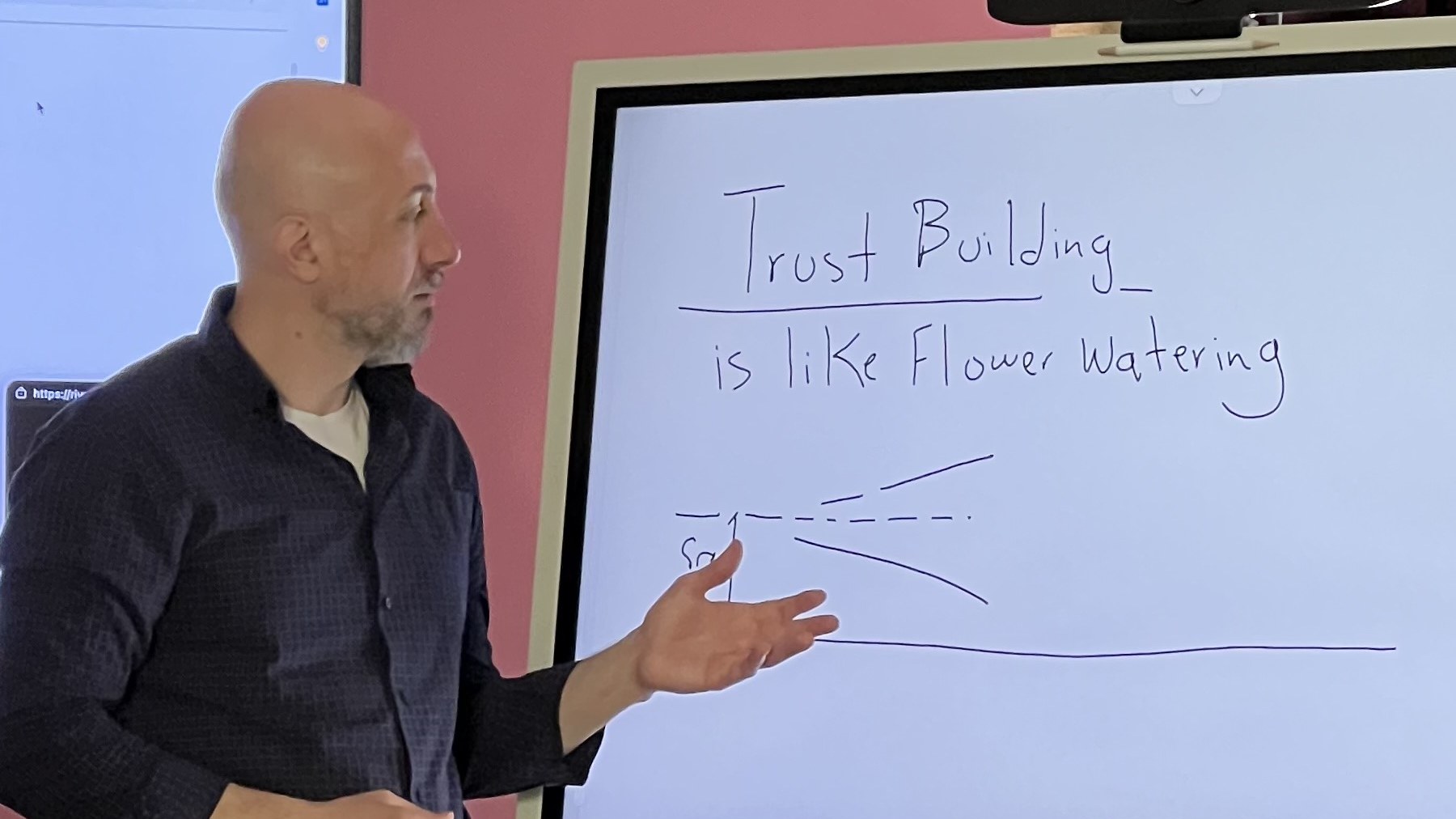
Architects are my clients. Developers are my clients. Interior designers are my clients. But architects and developers do different projects, different developers do different projects, and even inside one firm different teams have completely different needs.
The audience is defined by the type of projects, the type of their clients, the type of business they run and the role of the person you are talking to. And underneath all of it, a business outcome they are always trying to reach. Without that you are targeting a category, not a buyer.
Higher quality, animation, VR, more images with AI, faster turnaround. These can be useful, but none of them is a value proposition. An architect is not buying an image because they woke up wanting a beautiful image. There is something they are trying to sell, approve, present, raise money for, win, or get internal buy-in for.
When everybody sells images, animation, VR, speed, quality and AI, the conversation becomes about price. If the buyer sees everyone producing the same thing, the easiest comparison is portfolio, speed, availability and price. And somebody will always be cheaper.
They show similar projects, say similar things and use the same words. Quality. Photorealism. Storytelling. Attention to detail. Fast turnaround. Creative team. Latest technology. AI.
When ten studios look and sound alike, the buyer has little reason to choose except: I like this portfolio, they are available, someone recommended them, I already know them, they are cheaper. That is exactly why referrals became so powerful here. Trust is the shortcut.
That is one group of six, and they compound. Fixing where the work comes from only matters if the next set is working too.
 How you reach them
The wrong channel, too few actions to know anything, and a process nobody measures.
How you reach them
The wrong channel, too few actions to know anything, and a process nobody measures.